


Cordless Paint Sprayer
Cordless Paint Sprayer
2 batteries + charger included — not tool only
Order today — get it between - and -.
Shipping & returns
Shipping & returns
Free tracked shipping, dispatched within 24–48 hours, typically 5–7 business days in the US. Full refund within 30 days of delivery.
What's in the box
What's in the box
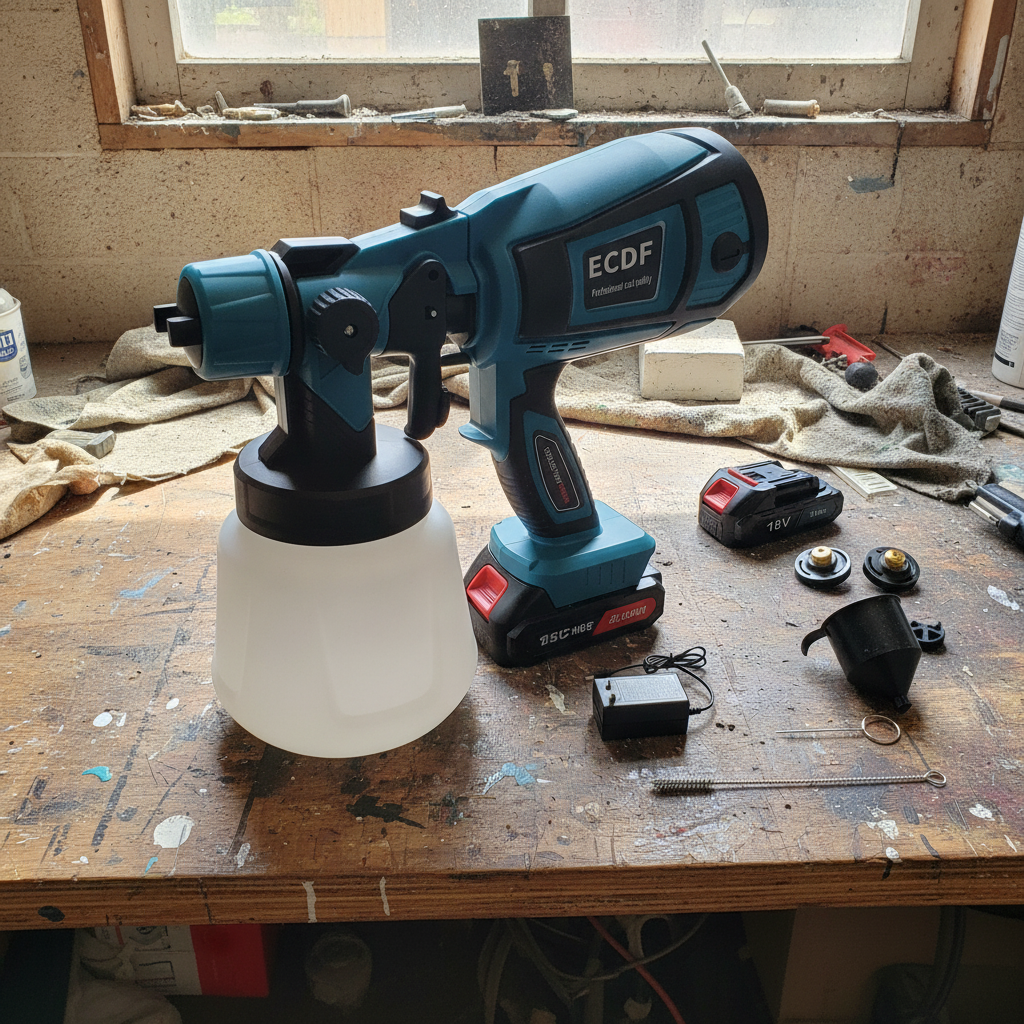
The cordless 18V sprayer, two 3.0Ah batteries, a charger, interchangeable copper nozzles, the viscosity cup, and the cleaning needle and brush. Nothing else to buy before you start.
30-day money-back guarantee
30-day money-back guarantee
Spray your fence, ceiling or doors. If it doesn't do the work, full refund within 30 days of delivery.

Cordless Paint Sprayer


 Power Tools
2 batteries + charger included · full kit · 30-day guarantee
Power Tools
2 batteries + charger included · full kit · 30-day guarantee
 Pick the job you've been putting off
The fence. The ceiling. The shed. The cabinet doors.
Nobody buys a paint sprayer. They buy their way out of one specific job they’ve been dreading.
 The fence that’s gone grey
 The ceiling you dread rolling
 Kitchen doors, no brush marksThe weakness every reviewer names
One paints. The other charges.

Runtime is the complaint, not the cord
Cordless isn’t what reviewers criticise in this class — runtime is. “The 30 to 40 minute battery life may not suffice for extended sessions, requiring spare batteries.”
So there are two in the box, plus the charger
Most cordless sprayers at this level ship tool only, and the battery costs you another $60–$120 before you can start. Here nothing is missing.
Get the kit — $139.99How it worksThin it. Set it. Spray it.

Thin it with the cup
The viscosity cup turns “about 10%” into an actual measurement.

Pick nozzle and pattern
Copper nozzles for different thicknesses; turn the air cap for horizontal, vertical or round.

Keep moving, keep your distance
Steady passes, overlapping. Do a test panel on cardboard first.
The part nobody filmsCleaning it
This is the number one objection in the entire category, by a mile. “Took longer to clean it than it took to paint the cribs.” “Paint gets into all the small recesses.” So let’s not pretend it isn’t a job.
Everything comes apart
Container off, air cap off, nozzle out. The included needle clears the nozzle, the brush does the recesses, and it rinses through.
One rule that decides everything
Do it the moment you finish, not the next morning. Every horror story in this category starts with paint that was left to dry inside the gun.
 Where it wins, where it doesn't
Use a roller for two doors. Use this for a fence.
Overselling a sprayer is what fills this category with one-star reviews. Here’s the honest split.
Worth getting the sprayer out
- Fences, sheds, cladding, gates, decking
- Ceilings and whole rooms
- Kitchen and wardrobe doors, done in a batch
- Garden furniture, shutters, radiators, railings
- Anything with mouldings, slats or mesh
Honestly, just use a roller
- One or two doors
- A single small room
- Skirting and narrow trim on its own
- Touch-ups and patches
- Anywhere masking would take longer than painting
Masking is real work. If covering the room takes longer than rolling it, the sprayer isn’t the right call that day.
What's actually in the boxNothing to buy before you start
2 batteries + charger
3.0Ah each. Swap and keep going instead of waiting.
3 spray patterns
Horizontal, vertical, round — turn the air cap, not the gun.
Copper nozzles
Interchangeable, for thin stains through to thicker paint.
Cup, needle and brush
The viscosity cup for thinning, the needle and brush for cleaning.
If you've never sprayed anythingA small gun is easier than a big one

It sounds backwards, and painters say it anyway: a low-output gun lays down less material at once, so it’s far more forgiving than a professional station that floods the surface before you’ve found your rhythm.
“I started with an expensive rig and didn’t like any of my results. I switched to a cheap HVLP and it was like magic.” The reason is simply that it moves less paint.
It’s also light enough to hold above your head — which is the whole point if a roller on a ceiling is no longer realistic for you.
Let's be straight with youWhat to expect on day one
You will have to thin the paint. Straight from the tin, it will sputter or not come out at all — that’s not a fault, it’s how every HVLP sprayer works. The viscosity cup is in the box precisely because guessing is what ruins first attempts.
There is a learning curve. Distance, speed, overlap. Spray a sheet of cardboard first. Everyone’s first attempt is mediocre and almost nobody’s second one is.
There will be overspray. It’s HVLP, so far less than a high-pressure airless, but fine mist still travels. Mask off properly and work outdoors or with the windows open.
And it is not a professional rig. It’s the tool for a homeowner with a fence, a ceiling or a set of doors and no compressor. For a full airless house repaint, hire the right machine.
On real jobsOut of the box and working


 Against what you'd otherwise do
Honest comparison
| ECDF cordless 18V | Corded handheld | Pro HVLP station | Brush & roller | |
|---|---|---|---|---|
| Works far from a socket | ✓ | ✗ | ✗ | ✓ |
| Battery and charger included | ✓ | — | — | — |
| No compressor or hose | ✓ | ✓ | ✗ | ✓ |
| Even finish on mouldings and slats | ✓ | ✓ | ✓ | ✗ |
| Quick on a fence or a ceiling | ✓ | ~ | ✓ | ✗ |
| Nothing to clean afterwards | ✗ | ✗ | ✗ | ✓ |
| Right choice for two doors | ✗ | ✗ | ✗ | ✓ |
Two crosses in our own column. A roller has nothing to clean and wins on small jobs — we’d rather say it than take the return.
4.6 / 5 — 4,380 verified reviewsWhat owners actually say
Whole fence in an afternoon. Second battery meant no waiting.
Ceiling done standing up. My shoulders thanked me.
Cleaned it in ten minutes because I did it right away.
Customer reviews4.6 out of 5, from real jobs
Sixty feet of it. Swapped the battery once and kept going.

Did the whole living room ceiling without wrecking my shoulders.
Ten minutes right after. Leave it overnight and that's on you.
First go sputtered because I rushed it. Used the cup, second go was perfect.

Twelve doors on trestles in the garage. No brush marks anywhere.
30Day guaranteeDo the job. Then decide.
Spray your fence, your ceiling or your doors. If it doesn’t do the work, send it back within 30 days of delivery for a full refund. Too many people in this category have opened the box and found a plastic toy instead of a tool.
Get the kit — $139.99Questions? We've got answersFrequently asked questions
How long does cleaning take?
Ten to fifteen minutes if you do it straight after you finish: container off, air cap off, needle through the nozzle, brush the recesses, rinse through. Leave paint to dry inside the gun overnight and it becomes an hour — that's true of every sprayer ever made.
Do I have to thin the paint, and by how much?
Yes. Straight from the tin it will sputter or not spray at all. Use the viscosity cup in the box: it tells you when the paint is flowing at the right rate, so you stop guessing at percentages. Thin water-based paint with water, and follow the paint manufacturer's own guidance on how far you can go.
Which spray pattern do I use?
Turn the air cap, not the gun. Horizontal for spraying up and down, vertical for side-to-side sweeps, round for small or awkward shapes like slats and mouldings.
What can I spray with it?
Thinned water-based paints and emulsions, wood stains, sealers, varnishes and primers. Fences, sheds, ceilings, cabinet doors, garden furniture, shutters, railings. Very thick or textured coatings are outside what a handheld HVLP will handle.
Which batteries fit it?
It takes 18V slide batteries of the Makita-style mount and ships with two 3.0Ah batteries and a charger, so you don't need anything else. If you already own 18V packs with that fitting, they'll work too.
Will it clog?
It can, like any sprayer — usually from paint that wasn't thinned enough or from dried residue. The cleaning needle in the box clears the nozzle in seconds, and cleaning immediately after use prevents almost all of it.
Is it any good for a complete beginner?
Better than you'd expect, and here's the counter-intuitive reason: a low-output gun puts down less paint at once than a professional station, which makes it far more forgiving. Spray a sheet of cardboard first and you'll have it inside ten minutes.
Should I use it for one or two doors?
Honestly, no. Between masking off and cleaning up you'd finish faster with a brush and a small roller. Get it out for fences, ceilings, sheds and batches of doors — that's where it pays for itself.
What safety gear do I need?
A proper respirator mask, safety glasses and gloves, every time. Work outdoors or with real ventilation, and follow the safety instructions on whatever you're spraying — some paints and solvents are flammable.
Power ToolsHandheld HVLP paint sprayer for domestic DIY use. Not professional airless spraying equipment. Most coatings must be thinned before spraying; always follow the paint or stain manufacturer’s own instructions on thinning, compatibility and safe use, and test on a sample surface first. Always wear a suitable respirator, eye protection and gloves, mask off surrounding surfaces, and spray outdoors or in a well-ventilated space. Many paints, stains, thinners and solvents are flammable and their vapours can ignite — keep away from heat, sparks and open flames, and never spray towards people, animals or electrical fittings. Clean the tool immediately after use. Charge and store batteries per the supplied instructions, indoors and away from heat. Runtime per charge varies with the coating, nozzle and how continuously you spray. Keep out of reach of children. Reviews reflect individual experiences.